
Prepare product


Q: What is the benefit of on-chip sensor fusion for drones?
A: The SFLP engine computes orientation at up to 240 Hz directly on the IMU, outputting quaternion, gravity, and linear acceleration through the FIFO. This saves 10–30% of MCU compute cycles that would otherwise run Madgwick/Mahony/EKF algorithms. For multi-MCU drone architectures (FC + companion
Q: How can Qvar be used for drone obstacle avoidance?
A: Qvar measures changes in electrostatic field as objects approach the sensor electrode. By placing Qvar electrodes on drone arms or body panels, the sensor detects proximity of walls, obstacles, or other drones at ranges of 5–30 cm (depending on electrode size and object material). While not a
Q: Is the LSM6DSVETR a drop-in replacement for LSM6DSV16X?
A: Yes, physically. Same LGA-14L (2.5×3×0.71 mm) package and pinout. The LSM6DSVETR adds Qvar and SFLP fusion registers while maintaining backward compatibility with LSM6DSV core registers. Firmware must enable Qvar and SFLP features to utilize the added capabilities.
The LSM6DSVETR is STMicroelectronics' advanced 6-axis IMU with an integrated Qvar electrostatic sensor and on-chip 6-axis sensor fusion engine that outputs pre-computed quaternion orientation, gravity vector, and linear acceleration directly — eliminating the need for host MCU sensor fusion computation. With 3.2 mdps/√Hz gyro noise, 70 µg/√Hz accel noise, ±4000 dps gyro range, MLC, FSM, ASC, and the unique Qvar channel, it is the most sensor-rich IMU in the LSM6DSV family. The on-chip fusion engine computes AHRS (Attitude and Heading Reference System) output at the sensor ODR, enabling low-power MCUs to access orientation data without running computationally expensive Madgwick/Mahony/EKF algorithms. For advanced drone applications, the LSM6DSVETR offers
| Parameter | Value |
|---|---|
| Manufacturer | STMicroelectronics |
| Part Number | LSM6DSVETR |
| Type | 6-Axis IMU: Accel + Gyro + Qvar + Embedded Fusion |
| Accel Range | ±2/4/8/16 g |
| Gyro Range | ±125/250/500/1000/2000/±4000 dps |
| Gyro Noise | 3.2 mdps/√Hz |
| Accel Noise | 70 µg/√Hz |
| FIFO | 9 KB with compression |
| MLC/FSM | MLC + FSM + ASC |
| Qvar | Integrated electrostatic sensor for proximity/touch/wheel |
| Embedded Fusion | On-chip 6-axis sensor fusion (quaternion + gravity + linear acceleration) |
| Interface | I²C / SPI / MIPI I3C |
| Current | 0.55 mA (combo HP) |
| Supply | 1.71V – 3.6V |
| Package | LGA-14L (2.5×3×0.71 mm) |
| Temperature | −40°C to +85°C |
Aurora supports customers with LSM6DSVETR — Embedded AI 6-Axis IMU with Qvar for Advanced Drone Sensing by STMicroelectronics sourcing through verified global supply channels. We help OEMs and manufacturers manage availability challenges, production requirements, and lifecycle risks with flexible procurement solutions.
All components supplied by Aurora follow strict quality control procedures, including supplier verification, documentation review, inspection, and traceability management to ensure product authenticity and reliability.
When original LSM6DSVETR — Embedded AI 6-Axis IMU with Qvar for Advanced Drone Sensing by STMicroelectronics components face shortages, lifecycle changes, or long lead times, Aurora helps customers identify suitable alternative components based on technical requirements, application needs, and supply conditions.
Need LSM6DSVETR — Embedded AI 6-Axis IMU with Qvar for Advanced Drone Sensing by STMicroelectronics availability or sourcing support?
Contact Aurora for component verification, quotation, and reliable supply solutions.
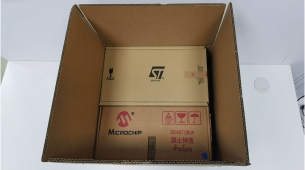

Aurora's expansive global shipping and logistics hubs encompass nearly 200,000 ft2 of warehouse space, ensuring the secure storage and meticulous handling of your products throughout the entire process, from sourcing and inspection to testing and safe shipment.

STPMIC1APQR is a power MOSFET transistor from STMicroelectro
STM32F031K6U6 is a ARM Cortex-M0 microcontroller from STMicr
L78L05ACUTR is a linear voltage regulator from STMicroelectr
STM32F429VIT6 is a ARM Cortex-M4F high-performance microcont