
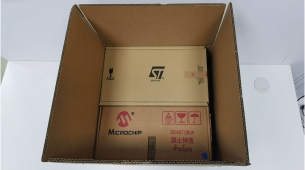
Prepare product


Q: Why does BLHeli_S use an 8-bit MCU instead of a 32-bit ARM?
A: BLHeli_S was originally architected for the Silicon Labs EFM8BB1 (C8051) but was ported to the STM8S because STM8 offered better cost, better availability, and a genuine hardware advanced timer with dead-time insertion. For the ESC control loop — which primarily runs a state machine with ADC-trigger
Q: Can the STM8S003F3P6 run DShot telemetry?
A: Yes. BLHeli_S firmware with DShot telemetry requires precise timing to encode RPM, temperature, and voltage data into the DShot telemetry packet on the bidirectional DShot line. The STM8S003's UART and timer capture/compare units handle this with software bit-banging at the required 5.5 µs bit time.
Q: What's the difference between STM8S003F3P6 and STM8S103F3P6?
A: The STM8S103F3P6 is an Access Line variant with identical Flash (8 KB) and SRAM (1 KB) but with a larger 640-byte EEPROM (vs. 128 bytes on the S003) and slightly different analog characteristics. Both are pin-compatible in TSSOP-20. The S003 Value Line is the lower-cost variant intended for high-vol
The STM8S003F3P6 belongs to ST's STM8S Value Line — the most cost-aggressive 8-bit MCU family ST has ever produced. Designed to compete at sub-$0.30 price points in high volume, the S003 delivers genuine STM8 core performance with hardware PWM, multi-channel ADC, and UART/SPI/I²C communication — all in a tiny TSSOP-20 footprint that demands minimal PCB real estate. In the drone ecosystem, the STM8S003F3P6 achieved legendary status as the default MCU for BLHeli_S ESCs . The BLHeli_S open-source ESC firmware was specifically written for the STM8S platform, leveraging the advanced 16-bit timer's complementary PWM outputs with automatic dead-time insertion to drive N-channel MOSFET half-bridges at up to 48 kHz PWM frequency. This enables ultra-smooth motor commutation with DShot, Multishot, an
| Parameter | Value |
|---|---|
| Manufacturer | STMicroelectronics |
| Part Number | STM8S003F3P6 |
| Core | STM8 (8-bit proprietary, Harvard architecture, 3-stage pipeline) |
| Max Clock | 16 MHz (internal RC or external crystal) |
| Flash | 8 KB (with read-while-write capability) |
| SRAM | 1 KB |
| EEPROM | 128 bytes (true data EEPROM, 300K write cycles) |
| Package | TSSOP-20 (6.5×4.4 mm, 0.65 mm pitch) |
| Supply Voltage | 2.95V – 5.5V |
| Operating Temperature | −40°C to +85°C |
| GPIO | 16 (5V-tolerant, up to 20 mA sink/source) |
| ADC | 1× 10-bit, 5 channels |
| Timers | 3× 16-bit: 1× advanced (PWM + complementary + dead-time), 2× general-purpose |
| Communication | 1× UART, 1× SPI (8 Mbit/s), 1× I²C (400 kHz) |
| Debug | SWIM (Single Wire Interface Module) |
| Power Consumption | ~4.6 mA (run @ 16 MHz), ~2 µA (halt) |
Aurora supports customers with STM8S003F3P6 sourcing through verified global supply channels. We help OEMs and manufacturers manage availability challenges, production requirements, and lifecycle risks with flexible procurement solutions.
All components supplied by Aurora follow strict quality control procedures, including supplier verification, documentation review, inspection, and traceability management to ensure product authenticity and reliability.
When original STM8S003F3P6 components face shortages, lifecycle changes, or long lead times, Aurora helps customers identify suitable alternative components based on technical requirements, application needs, and supply conditions.
Need STM8S003F3P6 availability or sourcing support?
Contact Aurora for component verification, quotation, and reliable supply solutions.
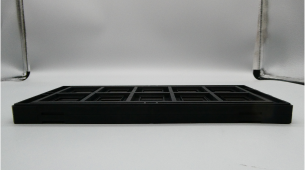
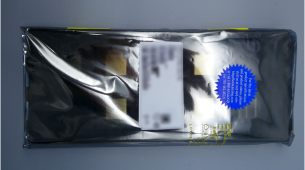
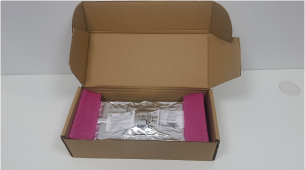

Aurora's expansive global shipping and logistics hubs encompass nearly 200,000 ft2 of warehouse space, ensuring the secure storage and meticulous handling of your products throughout the entire process, from sourcing and inspection to testing and safe shipment.

STPMIC1APQR is a power MOSFET transistor from STMicroelectro
STM32F031K6U6 is a ARM Cortex-M0 microcontroller from STMicr
L78L05ACUTR is a linear voltage regulator from STMicroelectr
STM32F429VIT6 is a ARM Cortex-M4F high-performance microcont