
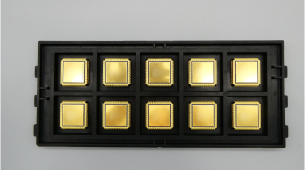
Prepare product


Q: Can the STM8S207 run standard BLHeli_S firmware?
A: Yes, but the BLHeli_S assembly source must be recompiled with the S207 memory map and 24 MHz clock configuration. Standard BLHeli_S HEX files are compiled for the 16 MHz S003 target and will not run correctly on the S207 without recompilation. Several community forks provide pre-compiled S207 BLHeli
Q: What external components are needed for CAN on STM8S207?
A: Only a CAN transceiver (PHY) — e.g., SN65HVD230 (3.3V, ~$0.30) or MCP2551 (5V, ~$0.40) — plus a 120Ω termination resistor at each end of the CAN bus. The S207's beCAN controller includes the CAN protocol engine, buffers, and filters on-chip. No external CAN controller (like MCP2515) is needed. Total
Q: How does STM8S207 compare to STM32F103 for DroneCAN?
A: The STM32F103 (Cortex-M3, 72 MHz, built-in CAN) is faster and has a mature DroneCAN software stack (libcanard, ArduPilot CAN driver). Use the STM32F103 if you need high CAN message throughput (>500 frames/sec), complex node logic, or ArduPilot compatibility. Use the STM8S207 if you need a low-cost C
The STM8S207CBT6 represents the pinnacle of the STM8S product line. With 128 KB Flash — 16× that of the S003 — complex firmware architectures become practical: full DroneCAN/UAVCAN node stacks, dual-bank firmware updates, extensive telemetry logging, and multi-protocol support — all on a single chip. The 24 MHz maximum clock speed provides 50% more processing headroom than the 16 MHz Value and Access Line devices, enabling faster commutation loops for high-RPM motors and more complex real-time control algorithms. The defining feature is the integrated beCAN (Basic Enhanced CAN) 2.0B controller . This is the only 8-bit STM8 family with native CAN support — making the S207 the natural choice for DroneCAN/UAVCAN ESC nodes, CAN-connected battery management systems, and distributed drone archit
| Parameter | Value |
|---|---|
| Manufacturer | STMicroelectronics |
| Part Number | STM8S207CBT6 |
| Core | STM8 (8-bit, 24 MHz max — 50% faster than Value/Access Line) |
| Flash / SRAM / EEPROM | 128 KB / 6 KB / 2 KB |
| Package | LQFP-48 (7×7 mm, 0.5 mm pitch) |
| Supply Voltage | 2.95V – 5.5V |
| Temperature | −40°C to +85°C |
| GPIO | 38 (5V-tolerant, 20 mA) |
| ADC | 1× 10-bit, 10 channels (with analog watchdog) |
| Timers | 5× 16-bit: 2× advanced PWM, 2× general-purpose, 1× basic |
| Communication | 2× UART, 1× SPI, 1× I²C, 1× CAN 2.0B |
| Special | 2 KB EEPROM, 24 MHz, beCAN, Window WDT, AWU |
| Debug | SWIM |
Aurora supports customers with STM8S207CBT6 sourcing through verified global supply channels. We help OEMs and manufacturers manage availability challenges, production requirements, and lifecycle risks with flexible procurement solutions.
All components supplied by Aurora follow strict quality control procedures, including supplier verification, documentation review, inspection, and traceability management to ensure product authenticity and reliability.
When original STM8S207CBT6 components face shortages, lifecycle changes, or long lead times, Aurora helps customers identify suitable alternative components based on technical requirements, application needs, and supply conditions.
Need STM8S207CBT6 availability or sourcing support?
Contact Aurora for component verification, quotation, and reliable supply solutions.
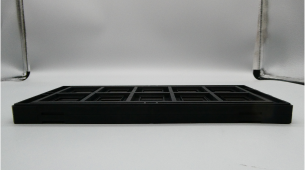
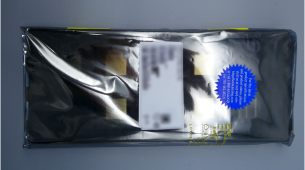
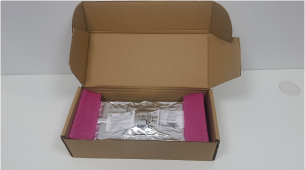
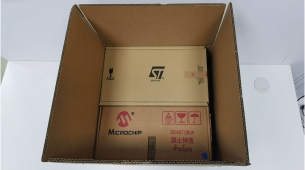
Aurora's expansive global shipping and logistics hubs encompass nearly 200,000 ft2 of warehouse space, ensuring the secure storage and meticulous handling of your products throughout the entire process, from sourcing and inspection to testing and safe shipment.

STPMIC1APQR is a power MOSFET transistor from STMicroelectro
STM32F031K6U6 is a ARM Cortex-M0 microcontroller from STMicr
L78L05ACUTR is a linear voltage regulator from STMicroelectr
STM32F429VIT6 is a ARM Cortex-M4F high-performance microcont